The vessel
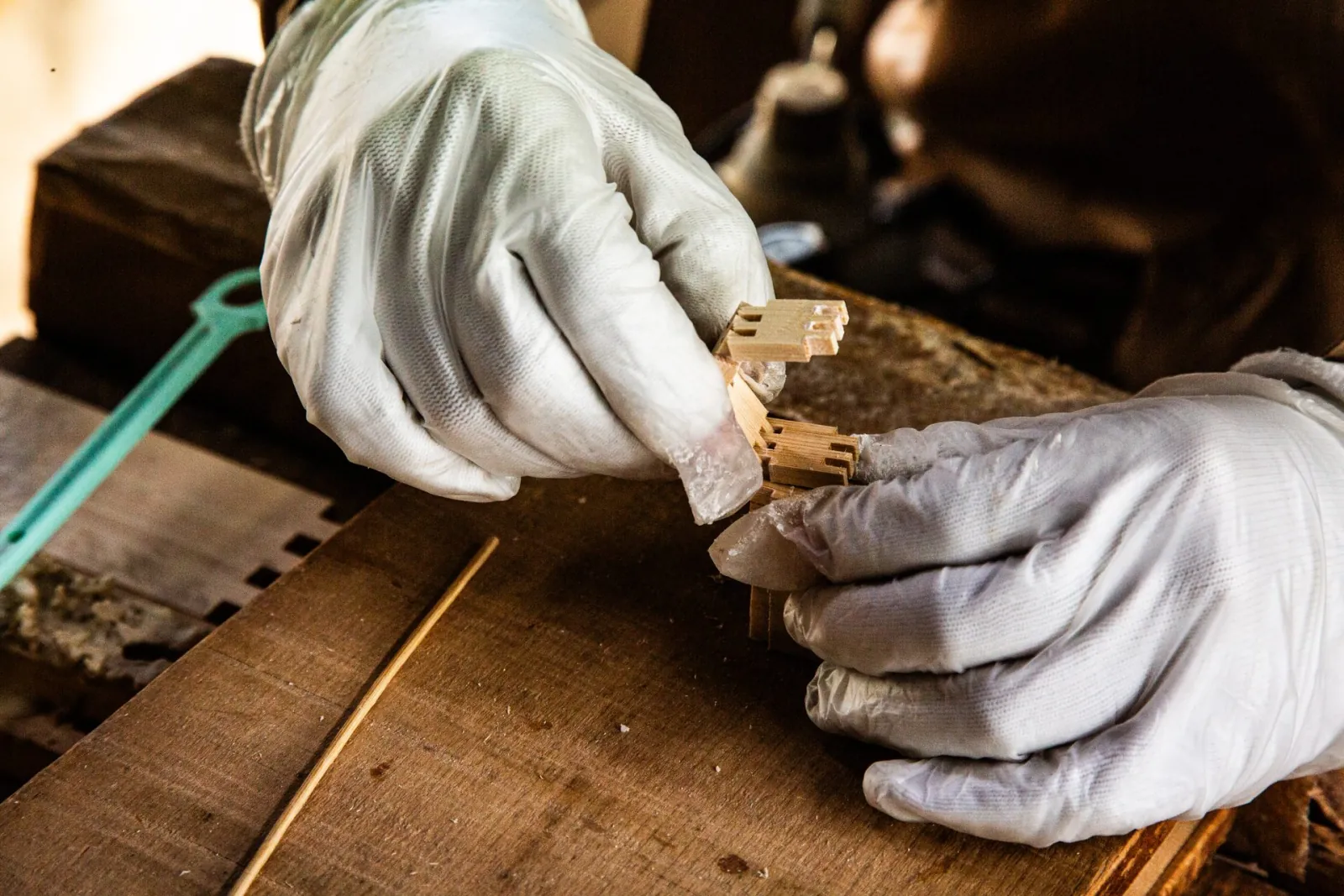
A masu is the square wooden box Japan has used for 1,300 years to measure rice and sake, and to share sake at weddings and celebrations. Most are made of hinoki — Japanese cypress, the wood of shrines and temples — prized for its clean fragrance and its resistance to moisture. Its name sounds like the Japanese for "to increase" (増す), which is why it is given as a wish for growing happiness. Read the full story of the masu.
1.6 millimetres
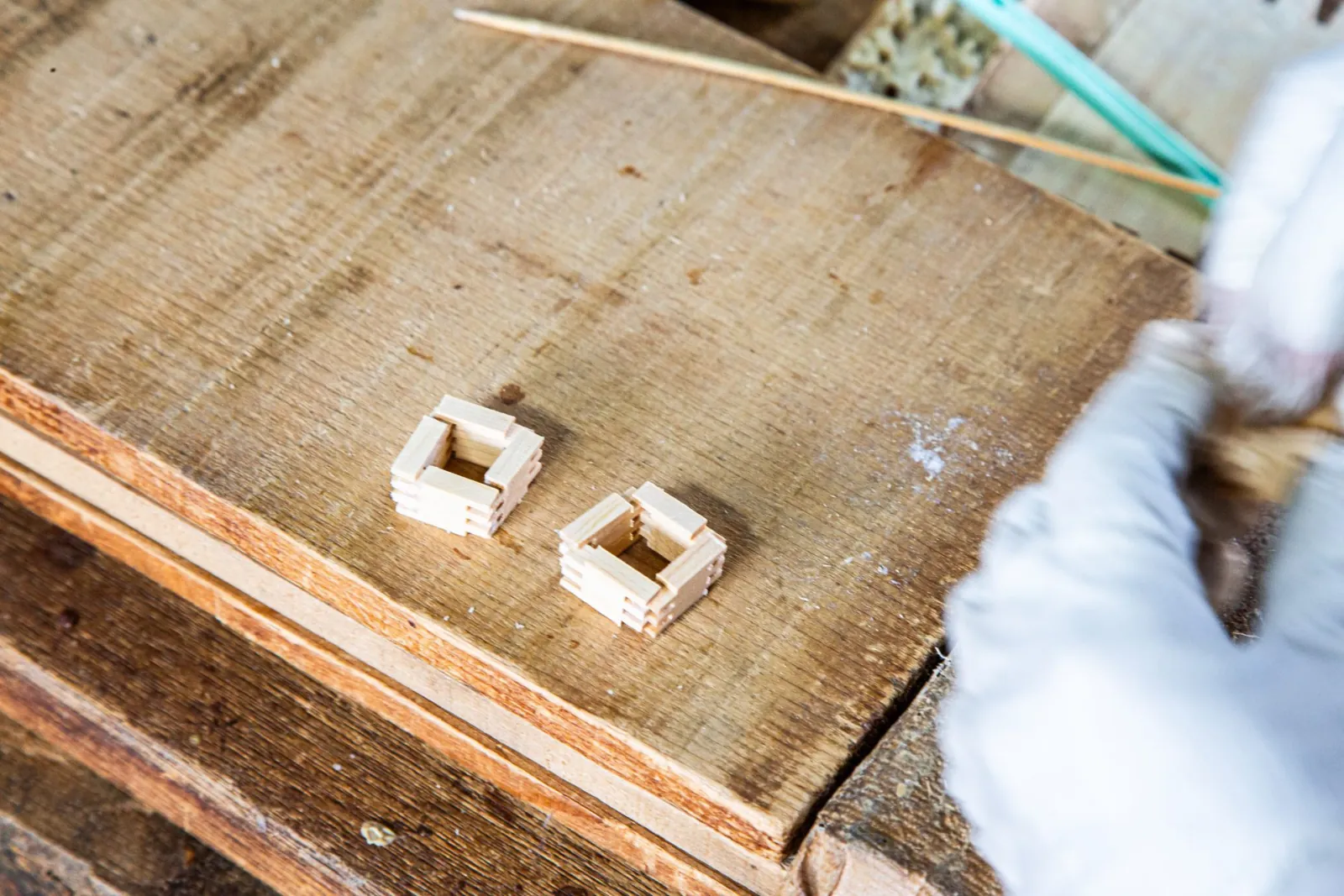
A sake masu has walls several times thicker. KUMIKI brings them down to 1.6mm, and at that thickness the wood sits on a boundary: one shaving too many and it cracks; one too few and the joints will not close. No machine setting finds that line. The artisan's hands do, piece by piece.
Wood holding wood: arare-gumi
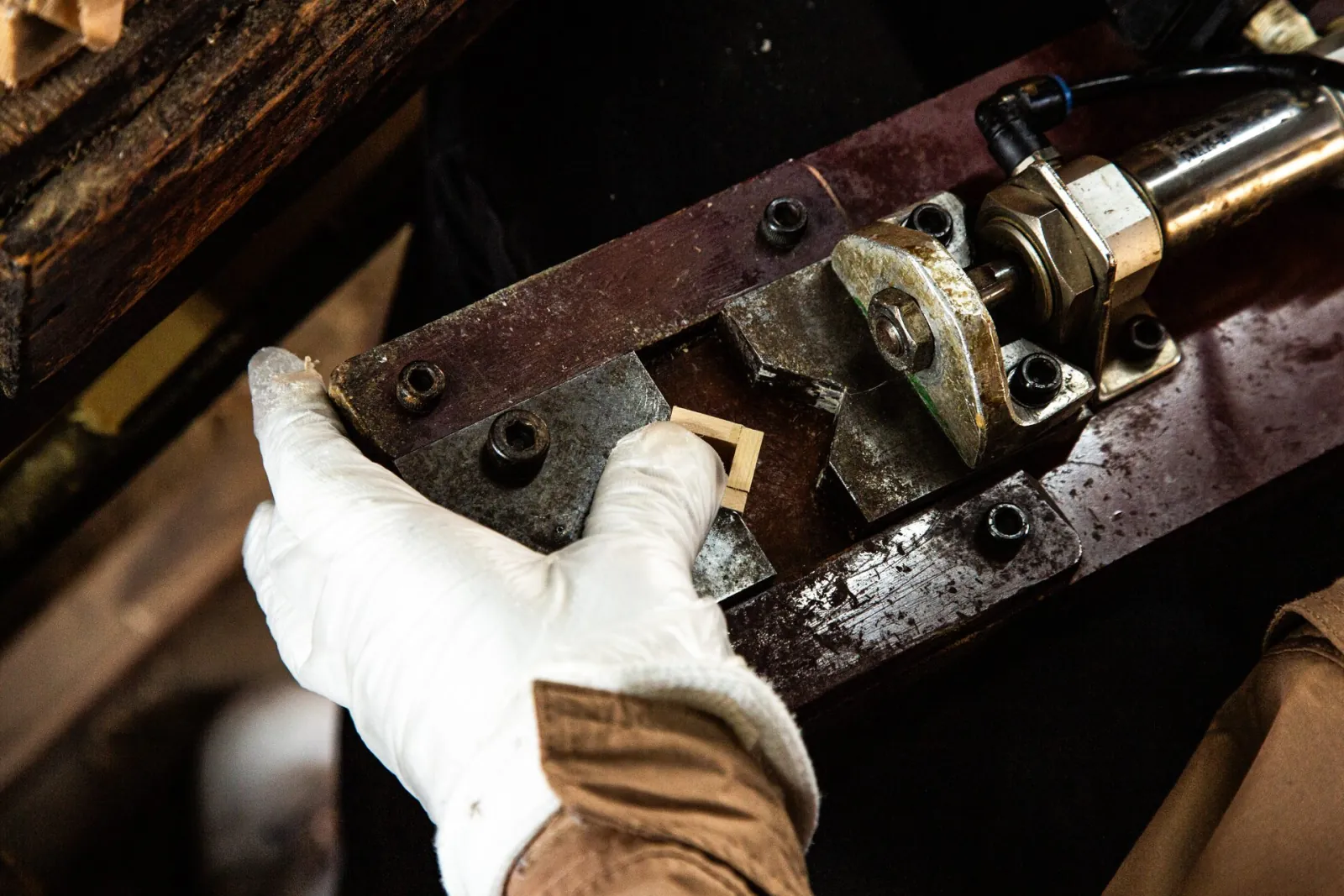
Look at any corner of a KUMIKI masu and you will see small interlocking teeth. This is arare-gumi, "hailstone joinery" — one of the techniques of kumiki, the Japanese art of joining wood without nails, the same structural idea that has kept Japanese temples standing for thirteen centuries. On a masu just 2cm wide, a single joint measures less than a millimetre. The brand takes its name from this craft.
The last touch, also by hand
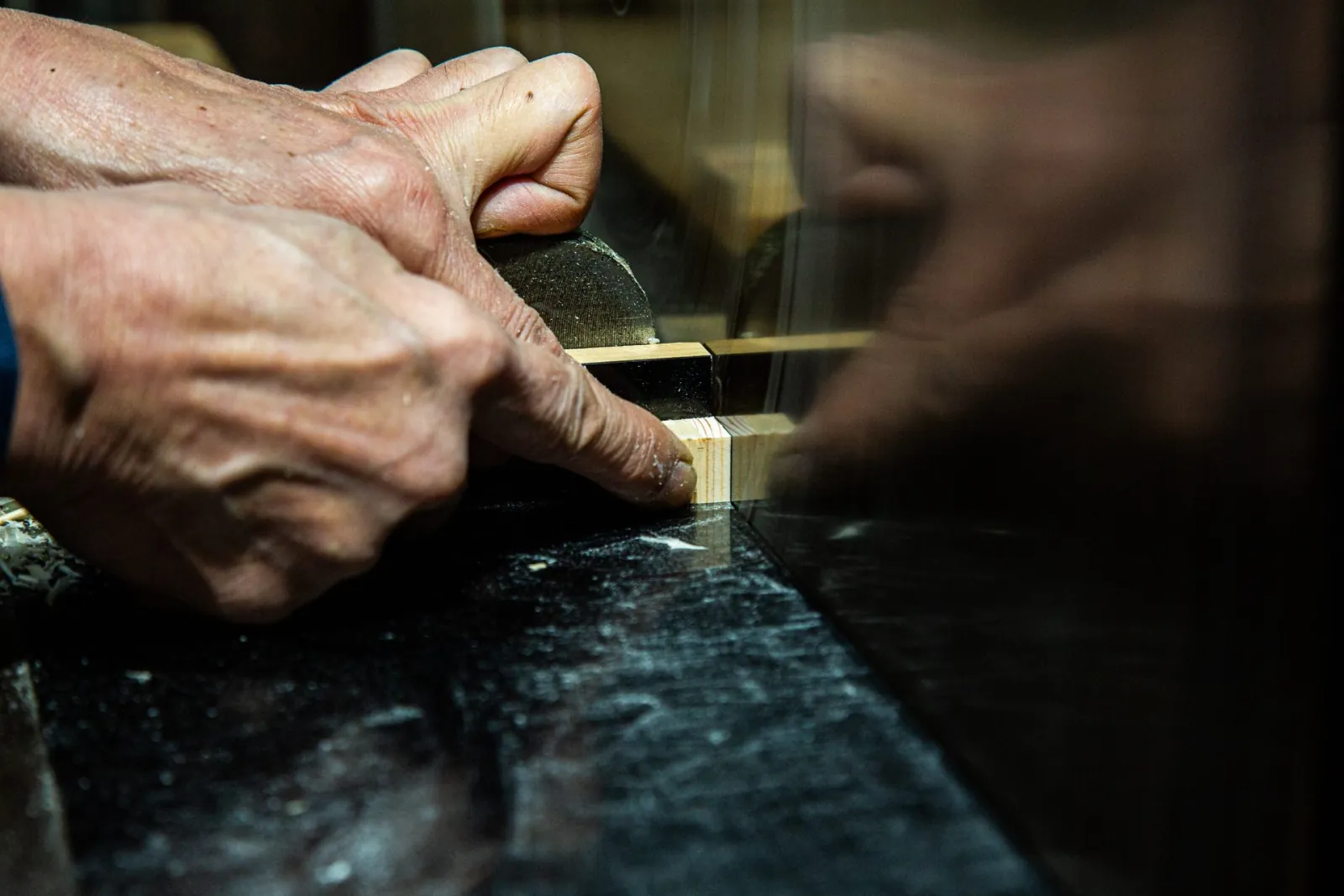
The finished masu receives a protective coating so it can be worn every day, and is then set as earrings, a necklace or a kanzashi hair pin with glass beads, temari or natural stones. Collection pieces use a standard chain and fittings; through our bespoke service, the metal of the fittings can be chosen to suit you.
Why only ten a month
There are faster ways to make things. We have not chosen them — the time spent with each masu is what becomes its precision. Every piece is made to order: we begin joining yours only after you place it, which is why delivery takes 2–4 weeks. It arrives in a hinoki masu box tied with mizuhiki, ready to give, with free tracked shipping worldwide.
How to care for hinoki jewelry
- Keep it out of water. The coating protects against everyday moisture, but take the piece off before bathing or swimming and avoid extreme humidity.
- Last on, first off. Put it on after perfume, lotion and hairspray.
- Wipe gently. A soft, dry cloth is all it needs.
- Rest it in its case. When you are not wearing it, keep it in its masu box or on its display case — away from direct sun.
The hinoki fragrance remains after coating — a quiet reminder of the wood every time the box is opened.
Craft & Care — Frequently Asked Questions
How is KUMIKI masu jewelry made?
By hand, one piece at a time. An artisan shapes four hinoki walls just 1.6mm thin, cuts interlocking teeth at each corner, and fits them together with arare-gumi joinery — no nails, no glue. The finished masu, about 2cm wide, receives a protective coating and is set as earrings, a necklace or a kanzashi. The atelier completes no more than ten pieces a month.
What is arare-gumi joinery?
Arare-gumi (hailstone joinery) joins the corners of a box with small interlocking teeth of wood, so that wood holds wood without nails or glue. It belongs to the same family of Japanese joinery, kumiki, used in temples that have stood for 1,300 years. On a KUMIKI masu, a single joint measures less than a millimetre.
Why is KUMIKI limited to ten pieces a month?
At 1.6mm, the walls sit on a boundary: one shaving too many and the wood cracks, one too few and the joints will not close. Only an artisan's hands can find that line, and that takes time. Every piece is made to order after you place it.
How do I care for hinoki wood jewelry?
Each masu has a protective coating for daily wear. Avoid long soaking in water and extreme humidity, put the piece on after perfume and lotion, wipe it with a soft dry cloth, and keep it in its masu case or display case when you are not wearing it. The hinoki fragrance remains after coating.